
Every industrial plant exists in two versions simultaneously. One lives in the documentation such as drawings, diagrams and models describing how the facility was meant to look while the other exists in reality – with all the modifications, reworks and deformations that have accumulated over years of operation. Documentation describing how the plant was supposed to look is Design Intent whereas documentation describing how the plant looks at the current moment is referred to as as-built. It can take the form of a parametric model in AVEVA E3D, a BIM model in Revit, a simpler solid model, or sometimes a point cloud alone. As-built is a concept, not a format.
Precisely because as-built is meant to describe reality, the industry has adopted an assumption that the more accurate it is, the better. That is a wrong assumption.
Equipment manufacturers boast scanner accuracy of 2–3mm, and engineers start assuming that the point cloud, and then the as-built model, must be equally precise. In reality, this stated accuracy applies to a single scanner position only. Across a large industrial plant, where data comes from dozens or hundreds of positions, the overall accuracy of the registered point cloud will differ – the accuracy of an as-built model is an entirely different conversation.
Where the myth of the millimetre-precise as-built comes from
High scanner accuracy does not mean that an as-built model should faithfully reproduce every pipe deflection and settlement of the foundations. That belief – though widespread – is a mistake that in practice produces models that are useless for further design work.
What an as-built model should actually be
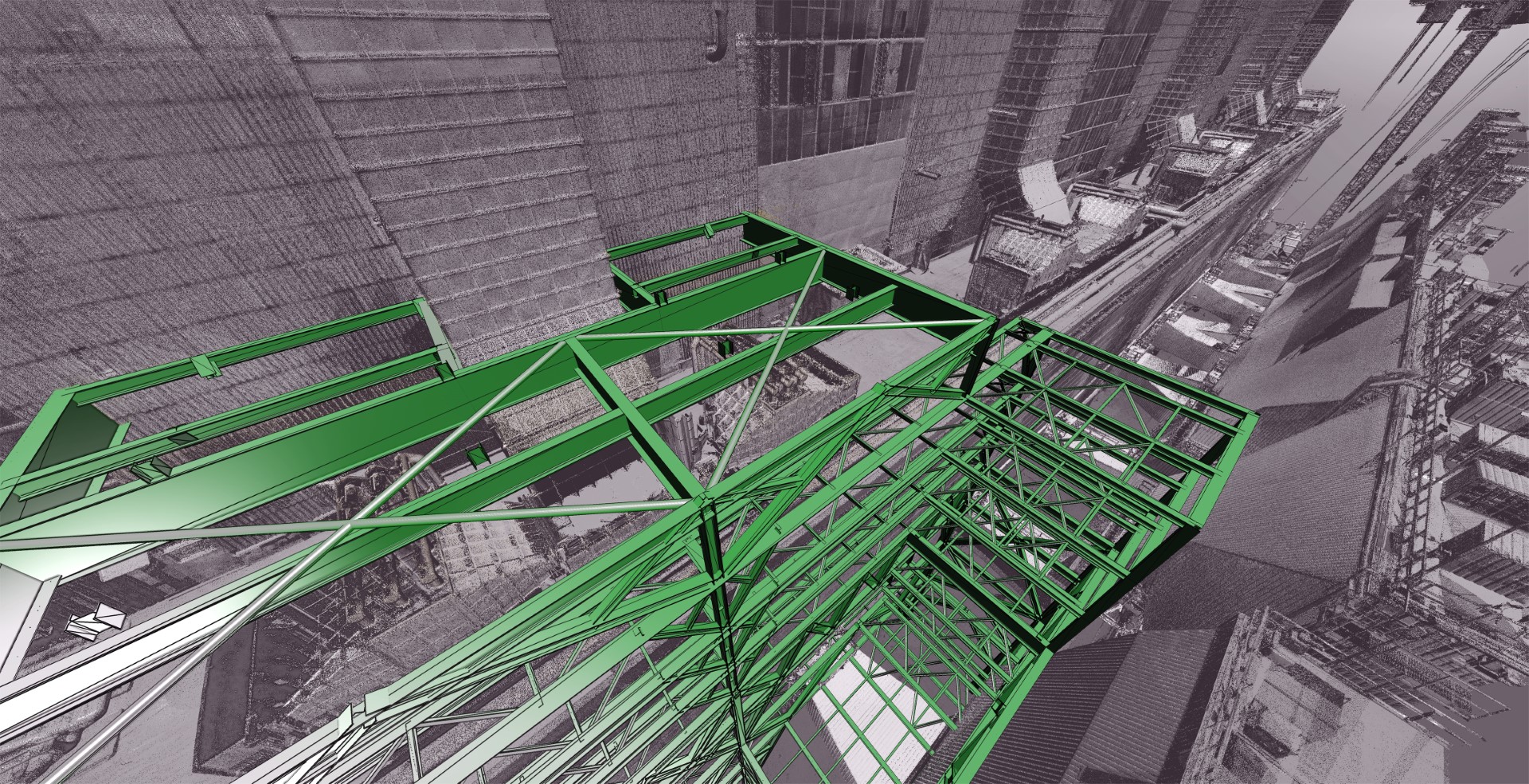
A good as-built model is deliberately simplified wherever precision has no bearing on further work. Pipe deflections caused by self-weight, minor structural settlements, deviations that have no effect on the functionality of the installation or its safety – all of this is deliberately regularised in the model for ease of use.
The reason is practical: isometrics generated from a pipe with a dozen irregular bends, faithfully reproduced from a point cloud, are useless in practice. Nobody can design, prefabricate, or order components on the basis of such drawings. A model must be usable, and usability requires simplification.
From our experience working with clients in the process industry, the best results come from an approach where the as-built model stays as close as possible to Design Intent – that is, to the original project documentation describing how the facility was meant to look – with precise representation reserved only for those areas where accuracy genuinely matters.
Where precision really matters
This does not mean accuracy is unimportant but in fact quite the opposite – in certain areas, millimetre precision is absolutely critical.
Prefabrication and tie-ins
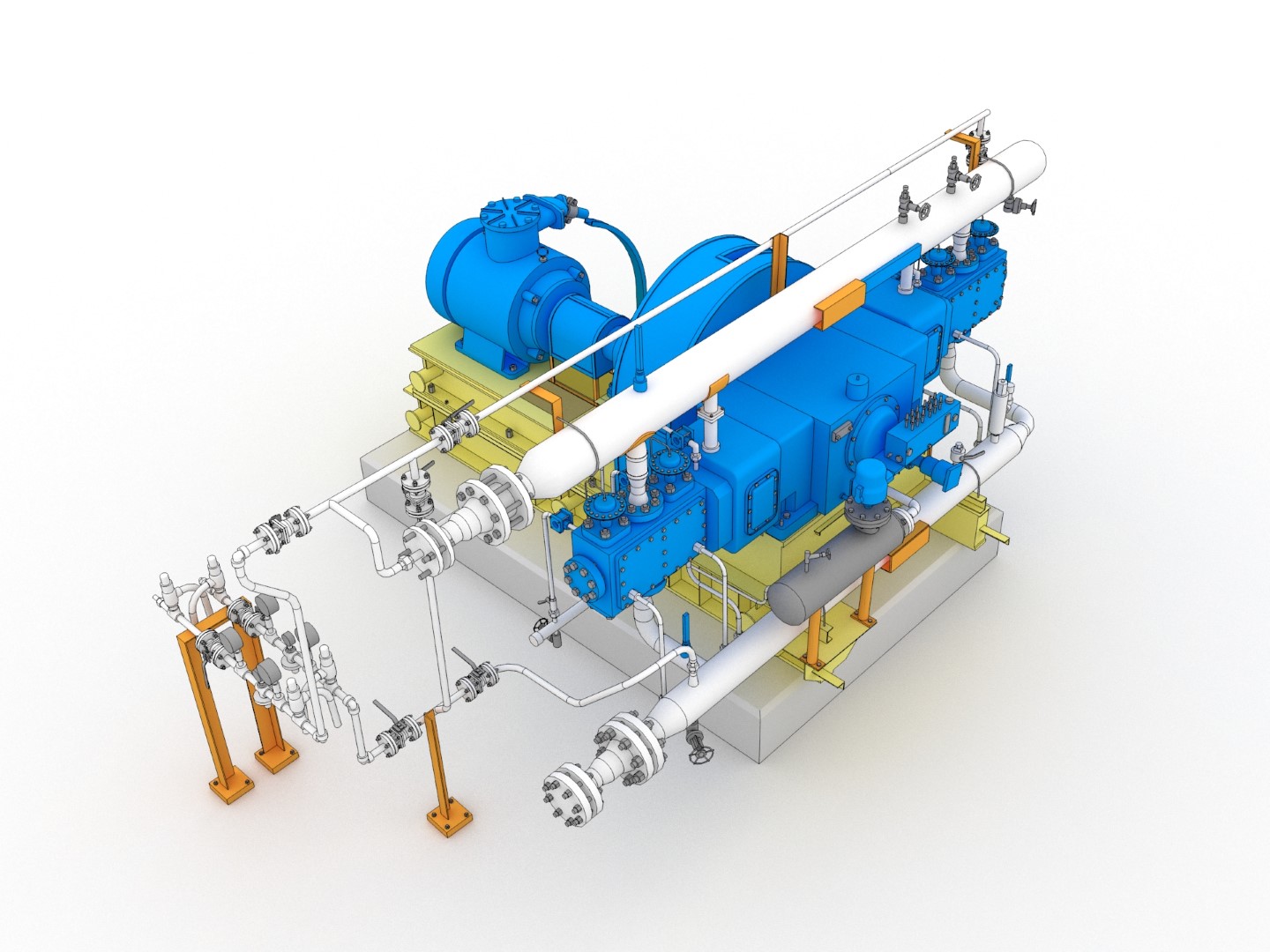
Elements prefabricated off-site must fit the actual state of the installation at connection points – so-called tie-ins. Fitting a flange requires precision of up to 5mm. There’s no room for simplification here. However, the general routing of a pipeline between connection points – a tolerance of around 30-50mm is entirely sufficient and doesn’t affect the quality of subsequent design work.
Deformation analysis – a job for the raw point cloud
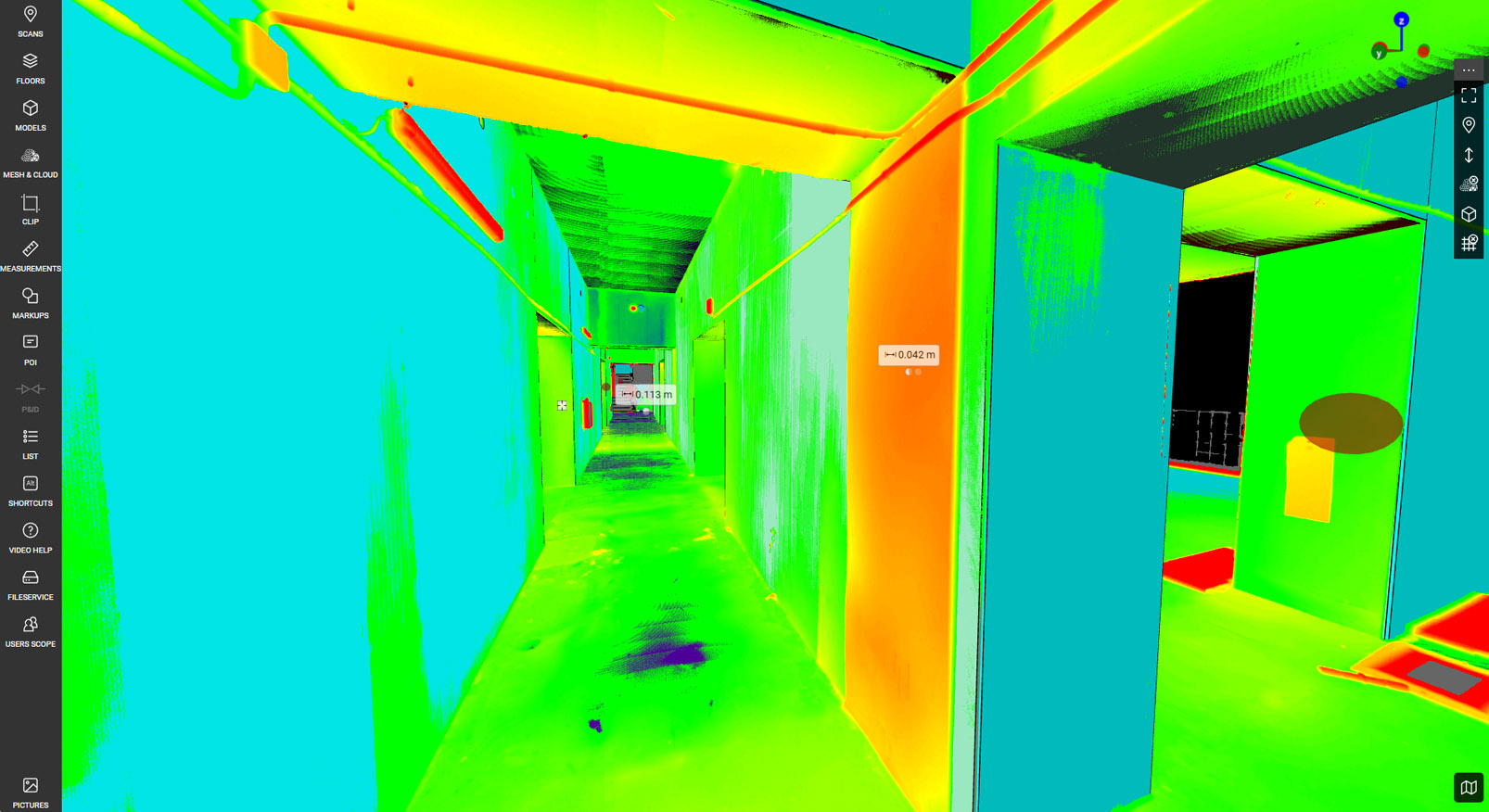
At 3Deling, we most often carry out settlement and deformation analyses directly on the raw point cloud data – it provides a complete and accurate picture of the geometry, while the as-built model is, by design, simplified and straightened. Comparing the point cloud with the original design documentation allows for precise measurement of deviations from the ideal state – beam deflections from vertical, twisting of structural elements, floor deflections from a perfect plane.
Why this matters for your budget
The closer an as-built model is to design intent – meaning the design documentation describing how the object was meant to look – and the more deliberately simplified it is, the easier and faster subsequent design work and 2D documentation generation become. This is a principle that, in practice, translates into real time savings at later project stages.
Over-precise models – faithfully reproducing every deflection and deviation – not only add no value but actively hinder progress. They produce heavy, unwieldy files with unusable isometrics, which cause additional modelling costs that the client pays for but cannot use.
 As-Built in construction and industry – different tools, the same goal
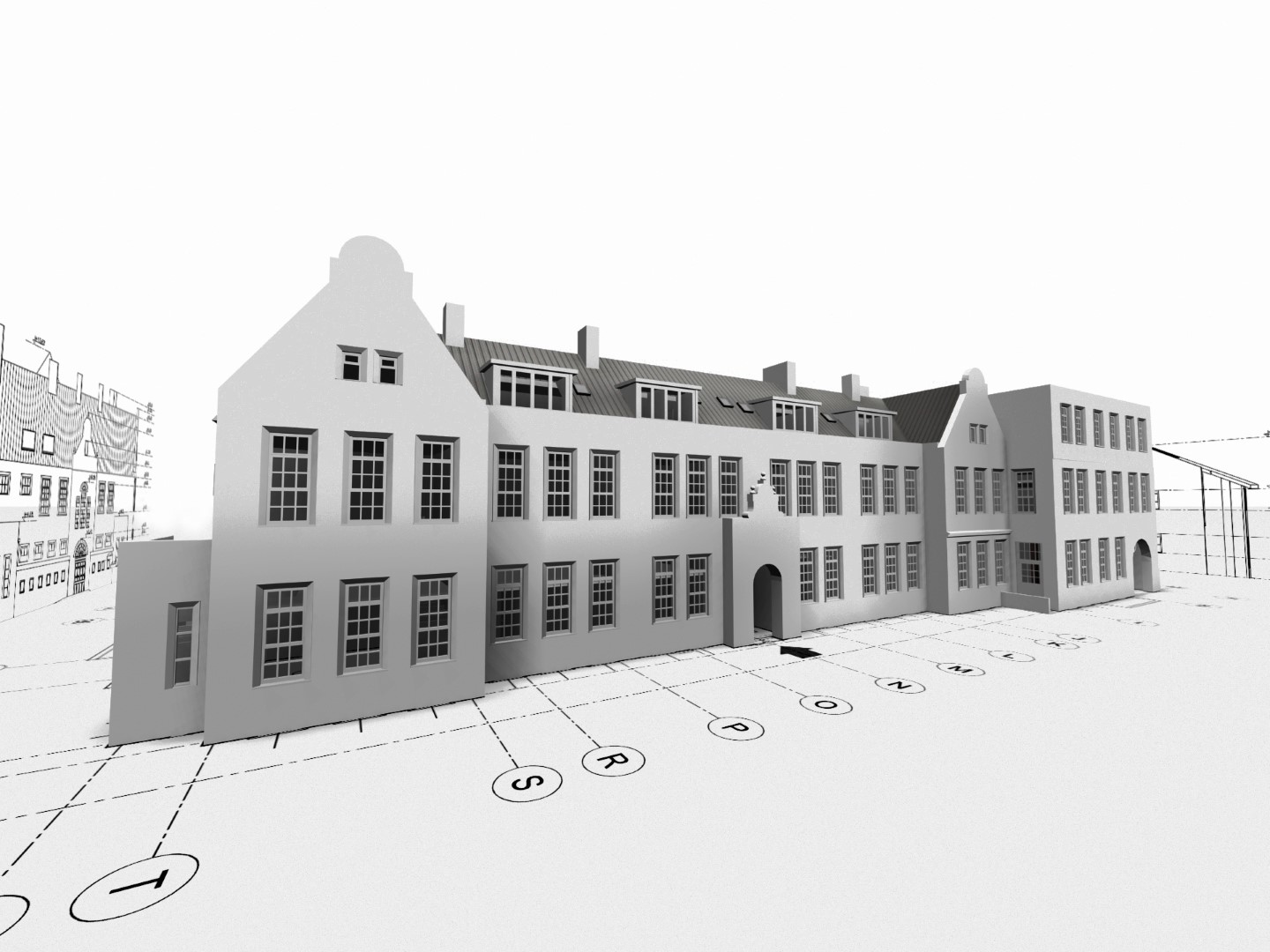
As-built modelling is carried out using different standards depending on the sector. In construction and architecture, the BIM standard dominates – models are created in environments such as Revit or OpenBuildings Designer.
In the process industry such as refineries, chemical plants and power stations, the standard is intelligent plant models created in systems such as AVEVA E3D, where process logic, piping specifications and links to technical documentation are built into the model structure.
Regardless of the tool, the goal remains the same: to deliver a reliable, useful representation of the facility’s actual condition – not the most accurate possible, but the most functional.
A good as-built model is not one that reproduces reality with millimetre precision at every point. It is one that delivers precision where it is needed with purposeful simplification everywhere else. This is an approach developed by the 3Deling team over years of work in the process industry.
Related articles from this series on 3D modelling
This article is part of a series dedicated to 3D modelling in the process industry. If you’re wondering how a mesh model differs from a CAD model and when to reach for which one, check out Not every 3D model is a CAD model – a difference that can cost you. And if you’re facing a decision about what scope of 3D modelling to order and how to match it to your project budget, read Before you order a 3D model – a strategy that saves your budget.
Planning a facility upgrade and want to make sure your model reflects the actual condition of the plant in a way that’s useful for your project? Contact us – our experts will advise you on the optimal scope of as-built survey and modelling.